Discovery Phase Services
Start your project right with our Discovery Phase Services! We analyze your business goals, user needs, and technical feasibility to define a clear vision, project scope, and roadmap, ensuring efficient development and minimized risks.

How PandaTeam can help your business
Clarify Your Vision
We help transform your initial ideas into a clear, actionable project concept. Our team works with you to define goals, target users, and desired outcomes.
Define Project Scope and Requirements
Through in-depth workshops and stakeholder interviews, we identify all functional and technical requirements to ensure there are no gaps or misunderstandings later on.
Validate Ideas Before Development
We create prototypes and MVP concepts to test hypotheses, helping you validate your idea and avoid costly mistakes during full-scale development.
Estimate Time and Budget Accurately
By analyzing requirements and technical complexity, we provide precise cost and time estimates, ensuring transparency and predictable delivery.
Reduce Technical and Business Risks
Our experts conduct feasibility assessments and risk analysis to ensure your project is technically sound and business-viable before moving forward.
Build a Strong Foundation for Success
The Discovery Phase results in a detailed roadmap, architecture concept, and project documentation — everything needed to move confidently into development.
Our Discovery Approach

1. Business Goals and Requirements Analysis
We begin by diving deep into your business objectives, challenges, and expectations. This stage helps us define project goals, key features, and success metrics to ensure alignment from the start.

2. Market and Competitor Research
Our team studies your market environment, target audience, and competitors to uncover opportunities and identify the best positioning for your product.

3. User Journey and UX Strategy
We map out user journeys, define personas, and outline the ideal user flow. This ensures that the final product not only meets business goals but also delivers a seamless user experience.

4. Technical Feasibility and Architecture Planning
We evaluate different technology options, assess risks, and create a high-level architecture concept. This helps ensure your project is scalable, secure, and technically feasible.

5. Prototype and Validation
We create low- or high-fidelity prototypes to visualize the concept. User testing and feedback allow us to validate assumptions and fine-tune the product before development.

6. Documentation and Roadmap Delivery
At the end of the Discovery Phase, you receive a complete package: technical documentation, user flow diagrams, feature lists, and a clear roadmap with timelines and cost estimates — ready for development.
Our Tech Stack
Jira

Google Workspace

Figma

Miro

Notion
Why choose us?

In-Depth Business Understanding
We take the time to analyze your business goals, market position, and challenges to ensure the project is aligned with your strategic objectives from day one.

Data-Driven Decision Making
Our team relies on research, analytics, and user insights to validate ideas and reduce risks before development begins.

Collaborative and Transparent Process
We work closely with your team through workshops and interviews, ensuring that every requirement and assumption is clearly defined and documented.

Strategic Foundation for Success
We turn research findings into actionable plans — clear roadmaps, user flows, and MVP scopes — giving your project a solid foundation for growth.
Related projects

Kitakoch
Automation of orders and supply of raw materials. Accounting and cost control.
Kunhnezug
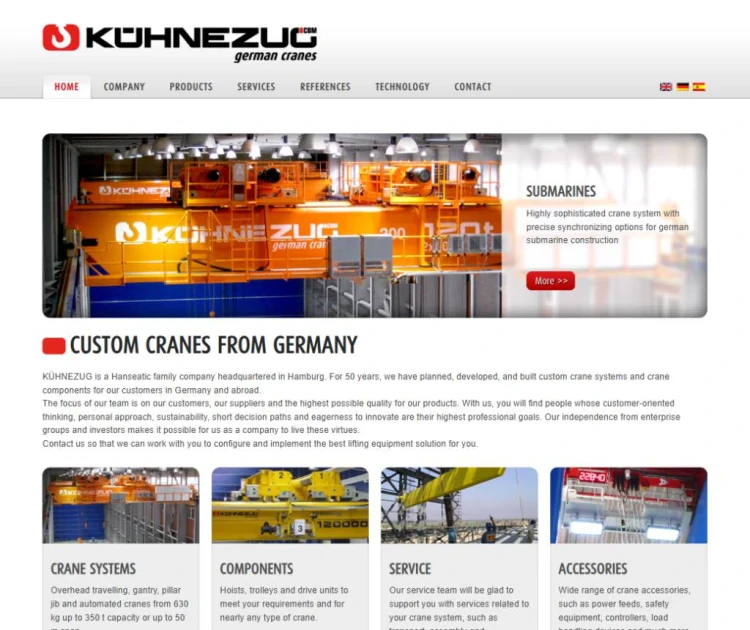
The development of a CRM system for managing crane analytics.
-main_thumb.webp)
PROF1 GROUP
Integration of various types of metrics and database optimization.
True Given
Great software begins well before anyone writes a line of code. The discovery phase turns vague ideas into crystal-clear plans: it proves the problem, defines the solution, narrows scope, and aligns everyone on budget, timeline, and measurable success.
At Panda Team, we turn uncertainty into a roadmap your developers can trust and your stakeholders can fund. Our discovery phase services reduce risk, compress time-to-value, and ensure you build the right thing the first time. Ready to move from assumptions to evidence? Talk to the Panda Team and kick-off a structured, high-signal discovery.
What Is the Discovery Phase in Software Development?
The discovery phase is a time-boxed, high-intensity effort that locks down objectives, users, scope, and constraints, then delivers the materials needed to start development confidently. In practice, a discovery phase service delivers requirements, a prototype of key journeys, a high-level architecture with major decisions recorded, plus a phased plan for timeline and budget. In other words, discovery gives you a single source of truth, built on research rather than assumptions.
Why the Discovery Phase Matters for Your Project
Software is easiest and cheapest to change before development begins. Discovery quantifies user value, clarifies scope, and prevents miscommunication that inflates costs later. With discovery phase consulting services, you replace guesswork with testable hypotheses and clickable prototypes.
This delivers credibility to executives and investors, reduces churn in design and engineering, and accelerates kickoff, because every decision is traceable to evidence. If you need stakeholder alignment without delays, start here. The Panda Team can host your kick-off this week and keep momentum high.
Key Goals of the Discovery Phase
Discovery is not an abstract workshop; it is a targeted mission with practical goals. First, build a shared understanding of the problem and desired business outcomes. Second, create a shared language for scope, non-functional requirements, and acceptance criteria.
Third, design a lean architecture that safeguards performance, security, and scaling from the outset. Fourth, generate a credible plan, with a timeline, budget, and phasing, that leaders can approve. Finally, produce the assets, such as prototypes, specs, backlog, etc., that let development begin immediately. In Panda Team, we always keep these goals visible and measurable throughout the engagement.
Benefits of Running a Discovery Phase Before Development
Teams that move straight to coding gamble with scope, costs, and user adoption. A structured discovery shortens time-to-value by aligning people, process, and technology before burn begins. If you’re building a new product, re-platforming, or integrating complex systems, discovery phase services for product development give you the confidence that every hour of development is pulling in the same direction.
Here’s what you gain immediately:
- Reduced risks. One source of truth, such as requirements, decisions, risks, means fewer contradictory interpretations. A documented risk register highlights issues early and assigns owners.
- Accurate estimates. With scoped features, architecture, and dependencies mapped, estimates move from hopeful to reliable. Leaders can approve budgets with fewer “unknown unknowns.”
- Improved UX. Validated flows and a deliberate architecture prevent expensive UI rework and technical debt. You start clean, scale predictably, and meet non-functional requirements from day one.
- Faster start. Developers receive prototypes, specs, and a prioritized backlog. Work begins without waiting for answers and continues with fewer blockers.
The net effect is momentum: discovery doesn’t delay development; it enables it. Ask the Panda Team to run a lightweight audit and show you where discovery can save months.
Discovery Phase Process Step by Step
Every organization is different, but the bones of a reliable discovery look similar. We adapt depth and pace to your budget and deadlines while protecting essential outcomes. Whether you’re a startup or an enterprise, we tailor discovery phase services of it project planning so decisions are fast, documented, and reversible where needed.
Kick-off meeting & goal alignment
We gather decision-makers, define success criteria, clarify constraints, and agree on communication and approvals (RACI). By the end of this session, we have a signed brief, a shared vocabulary, and clear boundaries, so the team can move fast without re-litigating basics every week.
Research & analysis
We interview stakeholders and users, review analytics, audit existing tools, and analyze the market and competitors. We often visualize opportunities using Opportunity-Solution Trees; the method keeps exploration aligned to outcomes and avoids random ideation. We also map technical constraints to surface risks early.
UX/UI prototyping
Based on research, we sketch flows for the top tasks and edge cases that break products. With clickable mockups, stakeholders and testers can experience the product ahead of development. We document heuristics, accessibility expectations, and design tokens to accelerate UI later.
Technical architecture
We draft the system blueprint: service decomposition, data models, integration patterns, and security/observability plans. We evaluate build-vs-buy decisions and produce stack recommendations with rationale. Where needed, we run proof-of-concepts to de-risk key tech choices.
Documentation & presentation
All insights are compiled into a precise package: BRD/SRS, architecture diagrams, risk register, prioritized backlog, and acceptance criteria. We align with ISO/IEC/IEEE 29148 so requirements are complete, unambiguous, and verifiable, replacing informal notes with engineering-grade specifications.
Final approval and transition to development
We freeze the MVP scope, confirm budget ranges and milestones, and agree on delivery rituals. If your team runs Dual-Track, discovery continues in thinner slices while delivery ships increment, so learning and building reinforce each other instead of competing for time. The Panda Team can stay engaged across both tracks.
Who Needs Discovery Phase Services
Discovery is the smartest first step whenever stakes are high or complexity is real. Startups use it to sharpen the MVP and attract investment. Scale-ups rely on it to modernize legacy systems without breaking revenue. Enterprises need it to coordinate across departments, vendors, and compliance.
If your initiative spans multiple systems, touches sensitive data, or must hit a hard deadline, project discovery phase services will front-load clarity and reduce risk so the build can proceed with confidence.
Discovery Phase Pricing and Timeline
Exact scope, complexity, and stakeholder availability drive both cost and duration. Most focused discoveries for a single-platform MVP are measured in weeks, not months; multi-system initiatives or regulated domains require more depth.We’ll tailor an option that respects budget while protecting outcomes, never pushing risk into development where it becomes expensive.
Start Your Discovery Phase with Panda Team
If you’re serious about building the proper product, discovery is your highest-leverage investment. Whether you need a concise MVP plan or an enterprise-grade blueprint, Panda Team will right-size the engagement and move quickly. Book your kickoff, invite your stakeholders, and let’s turn uncertainty into a roadmap your business can trust. We are ready to help when you are!
Share your vision.
Let's work together
Whatever the project or particular challenge you have in mind, we're here with the right people, process and technology to help deliver the transformation you need.